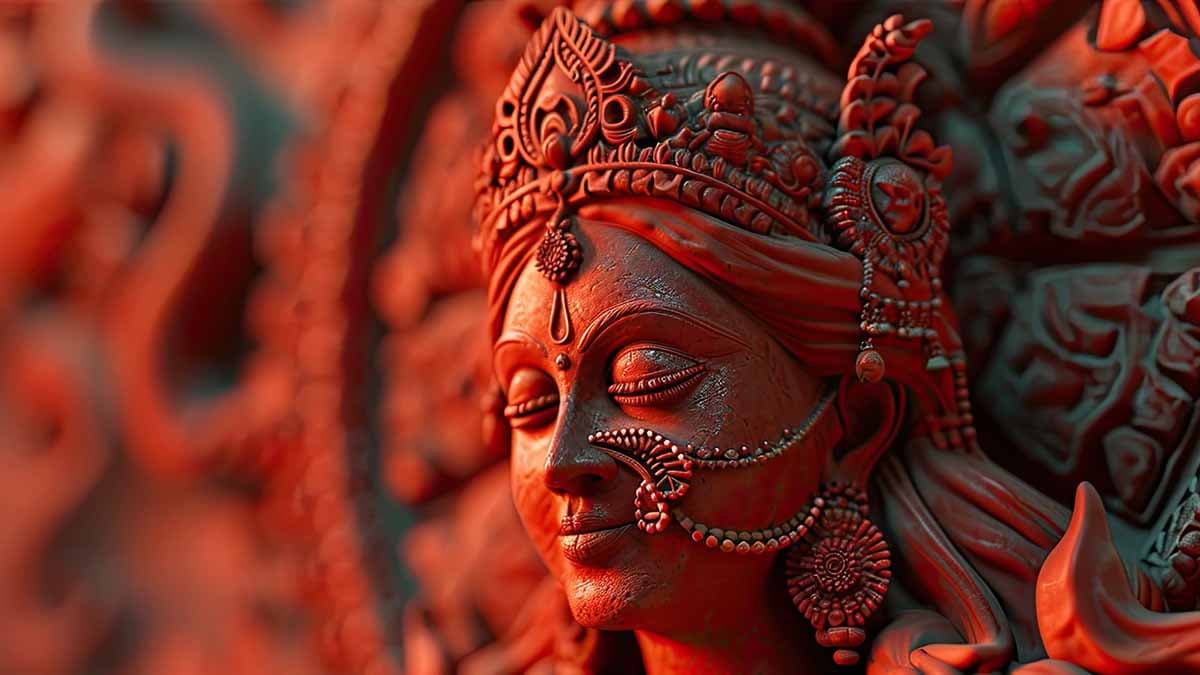
Navratri 2026 is just around the corner. While the nine-day celebration brings joy to households, there is a profound spiritual aspect behind this celebration related to embracing Matripaksha/Devipaksha and worshipping the feminine grace of Devi Durga. Here comes an interesting twist: while Navratri and Durga Puja almost follow the same calendar, there is a certain difference between them, connecting spiritual and worship diversity.
In this article, we will discuss everything about the Navratri 2026 celebration while quickly explaining the difference between Navratri and Durga Puja.
Navratri & Durga Puja – The Story & Differences
Are Navratri & Durga Puja the same? Well, the answer is no. While both celebrations embrace the feminine energy of Devi Durga and her divine grace, the difference lies in figurative forms and Puja Vidhi.
Navratri

Navratri is a nine-day celebration of Devi Durga in mother form. At its core, it is more spiritually aligned on the calmer side. Nava means nine, Ratri means a state of deep rest and spiritual relief from three worldly disturbances or Tapas: Adhi Bhoutik, Adhi Davik, and physical bothers. Navratri offers a deep spiritual awakening and embracing of feminine energies. That’s why each day of Navratri has a colour that carries a special spiritual significance.
Puja Vidhi Related Traditions & Roots
Navratri puja vidhi is mainly entangled with ‘Vaishnavism’ that follows a Satvik worship tradition. It indicates spiritual healing and calming of the soul against inner devils, i.e., Krodha (anger), kama (lust), and lobha (greed).
This year it begins on Sunday, October 11, 2026, with the worship of Maa Shailaputri.
Durga Puja
Durga Puja embraces Devi Durga in daughter form (Uma) while embracing her shakti (feminine rage and power) as the destruction of evil (asura). At its core and culturally, it refers to offering a grand homecoming treat to Uma at her parents’ home in Martya (Earth) after a year spent in Kailash with her husband Mahadev.
Unlike Navratri, it is typically a 4-day celebration, marking the advent of Devipaksha as Mahalaya, resembling the 1st day of Navratri. However, for 2026, Durga Puja dates fall from 16th October (Maha Shashthi) to 21st October (Vijaya Dashami).
Puja Vidhi Related Traditions & Roots
Durga Puja is mainly worshipped by following the Shakta trait of Hinduism, where Devi is offered meat and fish, along with some specific naivadya (offerings) on Navami or specific Tantrik tithi. However, several places also follow a pure ‘Vaishnav’ tradition of worship, or a mix of both Satvik and Shakta worship, depending on local traditions.
**Note that the puja Vidhi of Durga Puja is completely different from Navratri and is performed through qualified priests.
Navratri 2026: Complete Calendar
Calender
| Day & Date | Tithi | Navratri Colours | Forms of Durga |
|---|---|---|---|
| Sunday | 11th Oct, 2026 | Pratipada / Ghatasthapana | Orange | Maa Shailaputri |
| Monday | 12th Oct, 2026 | Dwitiya | White | Maa Brahmacharini |
| Tuesday | 13th Oct, 2026 | Tritiya | Red | Maa Chandraghanta |
| Wednesday | 14th Oct, 2026 | Chaturthi | Royal Blue | Maa Kushmanda |
| Thursday | 15th Oct, 2026 | Panchami | Yellow | Maa Skandamata |
| Friday | 16th Oct, 2026 | Shashthi | Green | Maa Katyayani |
| Saturday | 17th Oct, 2026 | Saptami | Grey | Maa Kalaratri |
| Sunday | 18th Oct, 2026 | Saptami Continues | Purple | Maa Mahagauri |
| Monday | 19th Oct, 2026 | Durga Ashtami & Onset of Navami | Peacock Green | Maa Siddhidatri |
| Tuesday | 20th Oct, 2026 | Navami ends & Dashami begins | - | - |
**Note: This year, Saptami tithi for both Navratri and Durga Puja spans 2 days due to an unusual intersection of tithis.
Explanation of Navratri Colours & Significance
Colours bear an immense spiritual significance during Navratri. The colours are standard, decided by the planetary significance of each day, which unfolds the hidden meaning underneath. For example, Sunday represents the Sun – a symbol of royalty and elegance, so the Navratri colour for Sunday is Orange.
In this way, every goddess of Navratri is dedicated a particular colour as per the day that further interconnects planetary impact on her vigour and strength.
However, the nine days’ colours of Navratri are orange, white, red, royal blue, yellow, green, grey, purple and peacock green. Note that purple and peacock green are included to complete the 9-day sequence. In some years, pink replaces one colour depending on the onset and weekday sequence, but mainly the colour palette remains unchanged.
Explanation of Navratri Colours in Relation to Planetary Energy & Devi’s Power
Navratri 2026 Weekdays Sequence
Navrathi
| Navratri 2026 Weekdays Sequence | Colours by Day | Ruling Planet | Devi Form & Spiritual Significance |
|---|---|---|---|
| Day 1 | Sunday | Orange | Sun | Maa Shailaputri is worshipped for purity, stability, and devotion. |
| Day 2 | Monday | White | Moon | Maa Brahmacharini is worshipped for peace, discipline, and devotion. |
| Day 3 | Tuesday | Red | Mars | Maa Chandraghanta is worshipped for courage and strength. |
| Day 4 | Wednesday | Royal Blue | Mercury / Budh | Maa Kushmanda is worshipped for good health and positivity in life. |
| Day 5 | Thursday | Yellow | Jupiter | Maa Skandamata is worshipped for compassion, love, and protection. |
| Day 6 | Friday | Green | Venus | Maa Katyayani is worshipped for overcoming negativities. |
| Day 7 | Saturday | Grey | Saturn | Maa Kalaratri is worshipped for overcoming fear and destroying evils. |
| Day 8 | Sunday | Purple | - | Maa Mahagauri is worshipped for peace, contentment, and compassion. |
| Day 9 | Monday | Peacock Green | - | Maa Siddhidatri is worshipped for fulfilment and prosperity. |
Navratri Puja Vidhi 2026 at Home – A Complete Guide
Unlike Durga Puja, Navratri is a homely celebration. However, specific cultural celebrations like Garba dancing are a part of the celebration in some places. However, devotees practice a Satvik lifestyle, while some keep a Navratri fast during the day. Whereas Durga Puja happens to be a bigger and community-centric celebration, keeping Durga Puja pandal hopping across mandaps or pandals as the pivotal attraction.
Navratri puja vidhis involve simple steps, starting from Ghatasthapana till Visarjan.
- Keep the puja space clean and pure.
- Take a fresh bath before entering the room and wear comfortable, breathable clothes.
- Bring an image of Maa Durga and install it in the room.
- Perform Ghatasthapana as per the timings, while chanting the beej mantra.
- Offer fruits, prasad, kumkum, and other offerings according to the day (for example, Navratri chaniya choli on Tuesday or on Tritiya) along with reciting Durga mantras.
- Perform morning and evening aarti every single day.
- Follow proper rules of Visarjan on Vijayadashami. Take advice from qualified priests for better guidance.
How to Do Ghatasthapana for Navratri at Home?

- Clean the puja space in the early morning of October 11th, 2026.
- Take a medium-to-large copper or brass thali and smear it with clean soil.
- Put a Kalash/Ghata (copper/ clay/ brass) on it; keep a few grains of rice, a coin, and a supari inside.
- Draw a Swastik with tilak and kumkum on the outer part.
- Fill it with clean water or Gangajal. Then close it with fresh mango leaves in odd numbers (5, 7, 11, etc.)
- Light a diya and chant the pratishthapana mantra "Om Aim Hreem Kleem Chamundaye Vichche".
How to Do Navratri Kanya Puja at Home?

Many families perform kanya pujan during Navratri on Ashtami and Navami tithi. The belief is directly connected to worshipping Devi Durga in her Balika (early to late toddler) form as Navadurga. This is how it is followed.
- Invite home 9 young girls aged between 2 and 12.
- Wash their feet with clean water, worshipping them as the divine mother.
- Worship and embrace their graces with aarti.
- Serve them halwa-puri-chana or kichdi, depending on your traditional roots.
- Honour them with small gifts and a tiny Dakshina as per your affordability.
Navratri 2026 Celebration Guide – Fasting Rules & Festivity Tips

Navratri celebration nurtures festivity and spiritual devotion both at one time. While fasting aims to bring serenity to the inner soul, the festivity brings togetherness, laughter, and celebration.
Navratri Fasting Rules
Navratri fasting rules are very basic and free of rituals. The simple principle of the Navratri fast is to follow a Satvik lifestyle and take Satvik food. However, there are certain limitations on the food list. While fruits, milk, curd, tapioca (sabudana), potato, rock salt, and specific flours, such as Rajgira atta, are allowed, normal grains, such as rice, wheat, dal, onion, and garlic, are advised to be avoided.
Navratri Celebration
- Keep the home and puja space decorated with types of lights, fresh flowers, and garlands.
- Invite friends and family and enjoy delicious home-cooked meals together.
- Search for and participate in Dandiya Nights in your nearby areas.
- Wear new clothes and spread joy by sharing Navratri wishes with each other.
Final Takeaway
The nine days of Navratri not only mean spiritual awakening but also bring a fantastic way to celebrate and share love and togetherness. So, stay happy and make this Navratri illuminated for everyone! Wishing you a happy Navratri beforehand!
FAQ
- When is Navratri starting in 2026?
Navratri 2026 is starting on October 11th, 2026.
- Why is Navratri celebrated for 9 days?
Navratri is celebrated to worship the feminine energy of Devi Durga in nine different forms that span nine days.
- Is Navratri 9 days or 10 days in 2026?
For 2026, Navratri continues for 10 days due to an unusual lunar tithi consequence, as Saptami spans 2 days.
- What is the Durga pooja date in 2026?
The Durga pooja date in 2026 is scheduled from October 16th to October 21st, 2026.
- Does Navratri colour change every year?
No. Navratri colour remains unchanged except for the sequence of weekdays. It changes based on the day of the week. For example, Sunday represents orange; Monday carries white colour, etc.
- Which goddess is offered Navratri chaniya choli & why?
Devi Chandraghanta is offered the Navratri chaniya choli for its ruling planet, Mars, which is red and symbolises vigour, strength, and warrior strength.