
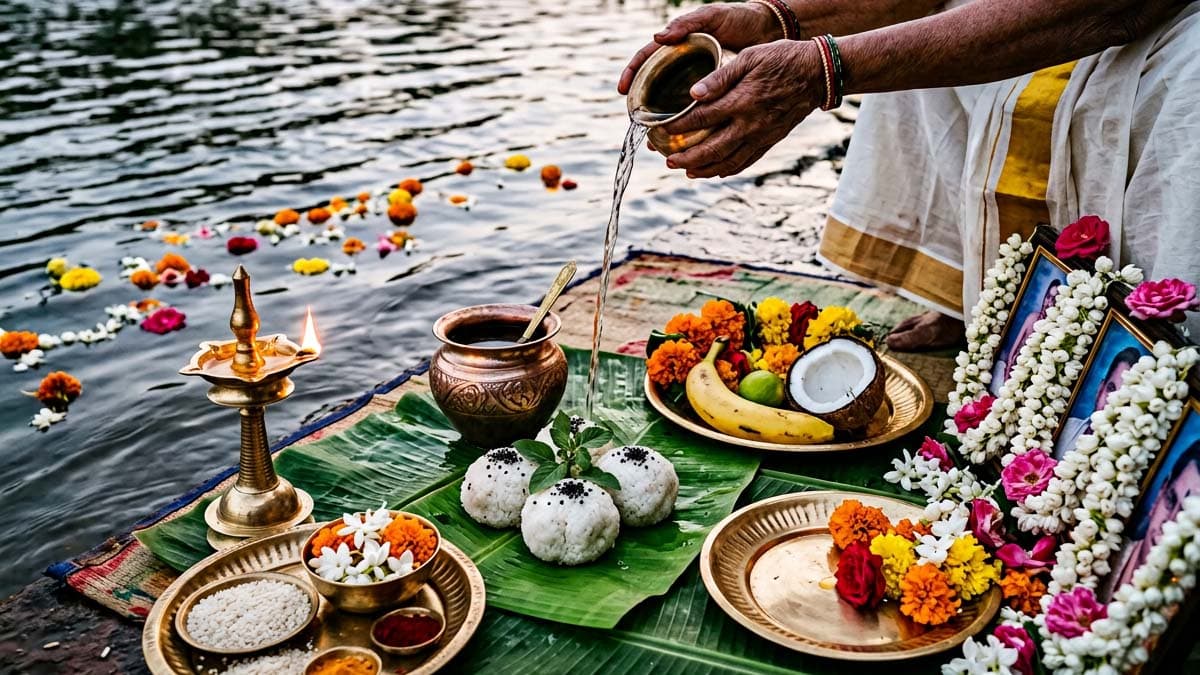
2026 Pitru Paksha has begun, starting on 26th September and concluding on 10th October. This fortnight (15 days this year) in the lunar calendar carries immense significance for Hindus to honour and pay respect to their departed ancestors by performing Shradh, tarpan, and a variety of reverent rites. While Shradh can be performed separately on the death anniversaries of ancestors, according to the lunar tithi, Pitru Paksha is an ideal time to perform it collectively, especially for families who can’t remember the exact date of departure of their ancestors. In this article, a detailed guide is provided on 2026 Pitru Paksha, Shradh tithi, rituals, and more.
Definition of Pitru Paksha & Shradh

Pitru Paksha
The term ‘pitru’ is derived from the Sanskrit word ‘pitri ’, meaning ancestors, while ‘paksha’ means a fortnight or 14 days. So, Pitru Paksha is a sacred 14-day period to honour and remember ancestors. It falls in Krishna Paksha in the Hindu lunar calendar and ends on Sarvapitru Amavasya, which is on 10th October this year. However, this year Pitru Paksha is extended to 15 days.
Shradh
‘Shradh’ comes from the Sanskrit word ‘Shraddha’, meaning showing gratitude and respect to dead ancestors. Pitru Paksha is also called Shradh Paksha, as it is considered the most auspicious period to perform all Shradh rites, including tarpan and pind daan, according to Hindu ideologies.
Why is Pitru Paksha Considered Important in Hinduism?
Pitru Paksha is considered auspicious in Hinduism for several reasons.
- Blessings & Remembrance: A season of remembering ancestors and seeking blessings through reverence, Shradh, tarpan, and a lot of rites.
- Carrying Lineage & Family Duties: Seeking guidance along with blessings to carry lineages, duties, and family traditions.
- Pitru Dosh Nivaran: To remove obstacles in kundlis and families by paying ancestral debts, called ‘pitra pina’.
2026 Pitru Paksha & Shradh Tithi – Complete Calendar
Pitru Paksha Calender
| Pitru Paksha Calendar 2026 | Tithi | Type of Shradh |
|---|---|---|
| 26th Sept. | Saturday | Purnima / Full Moon | Purnima Shradh |
| 27th Sept. | Sunday | Pratipada | Pratipada Shradh |
| 28th Sept. | Monday | Dwitiya | Dwitiya Shradh |
| 29th Sept. | Tuesday | Tritiya | Tritiya & Maha Bharani Shradh |
| 30th Sept. | Wednesday | Chaturthi | Chaturthi Shradh |
| 1st Oct. | Thursday | Panchami | Panchami Shradh |
| 2nd Oct. | Friday | Shashthi | Shashthi Shradh |
| 3rd Oct. | Saturday | Saptami | Saptami Shradh |
| 4th Oct. | Sunday | Ashtami | Ashtami Shradh |
| 5th Oct. | Monday | Navami | Navami Shradh |
| 6th Oct. | Tuesday | Dashami | Dashami Shradh |
| 7th Oct. | Wednesday | Ekadashi | Ekadashi & Magha Shradh |
| 8th Oct. | Thursday | Dwadashi | Dwadashi Shradh |
| 9th Oct. | Friday | Trayodashi | Trayodashi Shradh |
| 10th Oct. | Saturdary | Chaturdashi / Amavasya | Sarva Pitru Amavasya |
How is Shradh Practised During Pitru Paksha?
In general, Shradh is performed on the lunar tithi of the ancestor's death anniversary. However, considering the spiritual profundity of Pitru Paksha, Shradh can be performed both independently and during this season.
Shradh, Reverence, & Sankalp
Shradh is the broader ceremonial practice of honouring ancestors. It begins with taking a Sankalp by the ancestor’s name for whom the ceremony is arranged, and concludes with charity or donation after feeding invitees and animals. However, ceremonial rites vary as per family traditions.
Tarpan

Tarpan refers to offering water, combined with black sesame seeds, to ancestors. The tarpan vidhi across families is generally common, yet it is better to consult a priest to figure out if there are any special rituals according to your family tradition. Tarpan can also be performed independently during Pitru Paksha, marking aparanha (noon/ mid-day) as the most auspicious time.
Pind Daan
Pind daan refers to offering food to ancestors, generally made with rice balls, called pindas. However, the Shradh vidhi for pind daan may differ in families. For example, rice balls may accompany black sesame seeds for some families and then floating it on flowing water.
Feeding / Offering Food
Some households arrange a post-Shradh ceremony and serve sattvic food to priests, invitees, birds, cows, and other animals.
Charity
Charity or donations or daan marks the last stage of Shradh. It includes food, clothes, dakshina, cows, and even gold jewellery. It has different types and is completely optional for households, depending on their affordability.
How is Shradh Performed? Step-by-Step Guide to Shradh Vidhi
Throughout Pitru Paksha, Shradh can be practised both at home and at specific auspicious places. It involves simple vidhis and rituals.
- Figure out the tithi of the ancestor’s death in the Hindu lunar calendar and fix the date.
- If you can’t remember the tithi, choose an auspicious mahurat on any day or Sarva Pitri Amavasya.
- Keep the ritual area clean and keep essential samagri (ritual materials) in hand.
- Take a clean bath and wear simple, traditional clothes before entering the area.
- Consult with a qualified local priest for guidance at every step and take the Sankalp.
- Complete the reverential rituals along with mantras as guided by the priest.
- Offer tarpan, followed by pind daan and then immerse the pindas in fresh water or feed them to birds, as advised.
- Complete the ceremony by serving sattvic foods to invitees, priests, family members, and animals.
- Do some charity as per individual capabilities.
Auspicious Mahurats to Perform Shradh
- Aparahna kaal: It is the mid-day or noon, which is considered the most auspicious time to perform the ceremony. However, timings may vary a little as per the local panchang to begin and conclude the process.
- Kutup muhurat: It is a certain time interval in the day, calculated based on local sunrise and sunset and is also favourable to perform Shradh.
- Rohina muhurat: It comes after kutup muhurat and is also considered another favourable time for practising Shradh.
What to Avoid During Pitru Paksha?
Although Pitru Paksha is an auspicious time in Hinduism, it is ideal to avoid any festive celebrations during this time, considering its spiritual depth. Pitru Paksha requires devotion and simplicity over bright celebrations. Therefore, avoid weddings, housewarmings, or any subh karya (auspicious activities) during this time.
Final Thoughts
Practising Shradh during Pitru Paksha is a great way to show gratitude and honour to your ancestors. Try to maintain a disciplined and simple lifestyle during this phase. Your ancestors’ blessings are always with you!
FAQs
- How to choose the correct Shradh tithi?
The date of Shradh is chosen based on the death anniversary of the deceased ancestor as per the lunar tithi. However, if families can’t remember the exact tithi and date, they can perform the rite throughout the Pitru Paksha.
- When is Sarva Pitru Amavasya?
Sarva Pitru Amavasya falls on 10th October , 2026, i.e. on Sunday. It is the last and most auspicious date for performing Shradh rituals.
- When is Maha Bharani Shraddha?
Maha Bharani Shradh falls on 29th September, 2026. The tithi is determined by the constellation of Bharani Nakshatra.
- What is Magha Shraddha?
Magha Shraddha is practised according to the constellation of Magha Nakshatra. This year, it falls on Wednesday, 07th October.
- What is the ideal time to do tarpan?
The ideal time to do tarpan is mid-day or noon, i.e. Aparanha Kaal. However, it can also be done throughout the daytime in different auspicious time intervals.
- Can Shradh be performed at home?
Yes. Shradh can be performed at home. However, consult a qualified priest for better guidance.
- Can Shradh be performed for the living person?
Ideally, no. One should not practise the Shradh rites for a living person. However, traditions can vary according to place. Therefore, consult a qualified priest for better guidance.